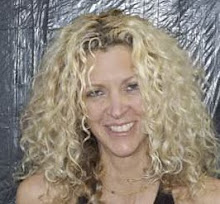
Halloween is as exciting for me now as it was when I was a child. From my earliest memory of dressing up as Little Red Riding Hood and visiting my Aunt Violet and Uncle Frank... to when I was a 14-year-old watching the original "Halloween" when it hit the movie theaters with my friends in 1978... to, today, as I carve a huge jack-o-lantern in record time, roast pumpkins seeds, and dress for the occasion (last year, I was Blessed Kateri Tekawitha, and this year, I'm a coyote).
Yet, the real reason for the day is more often than not overshadowed by ghosts, goblins, or princesses. It is the vigil of All Saints Day (Nov. 1): an evening that should be filled with light. In a world abundant with sin, greed, hate, and poverty, the saints will help light our way.
In preparation for All Saints Day, I recall this quote by Blessed Teresa of Calcutta:
"Keep in mind that our community is not composed of people who are already saints, but of those who are trying to become saints. Therefore let us be extremely patient with each other's faults and failures."
Sunday, October 31, 2010
Saturday, October 30, 2010
Blessed John Slade (? to Nov. 2, 1583)
"Halloween," "The Thing," "The Bride of Chucky," "Practical Magic," and "From Dusk Till Dawn," are on 24/7 this weekend and they're all movies that people recognize. However, there's a gruesome death that really did happen and few people know about.
Blessed John Slade was born in Manston, Dorsetshire, England. He was educated at New College in Oxford and later worked as a schoolteacher.
But, Blessed John Slade was true to his faith and refused to accept King Henry XIII's spiritual beliefs. So, on Nov. 2, 1583 Blessed John Slade was hanged, drawn, and quartered.
He was beatified on Dec. 15, 1929, just a week after being named a venerable. His feast day is today.
Blessed John Slade was born in Manston, Dorsetshire, England. He was educated at New College in Oxford and later worked as a schoolteacher.
But, Blessed John Slade was true to his faith and refused to accept King Henry XIII's spiritual beliefs. So, on Nov. 2, 1583 Blessed John Slade was hanged, drawn, and quartered.
He was beatified on Dec. 15, 1929, just a week after being named a venerable. His feast day is today.
Labels:
Blessed John Slade
Friday, October 29, 2010
St. Stanislaw Soltys Kazimierczyk (Sept. 27, 1433 to May 3, 1489)
A major literary agent in Boston contacted me today to say that although she loves "A Sinner's Guide to the Saints" and will continue to read it, she doesn't like Roman Catholic things. Is this because she's Jewish?
My intent is create a body of work that is spiritual and available to people of all religions. From the feedback that I'm getting, it exceeds anything I could have imagined. The saints are available to help all of us is, in part, my mantra.
The literary agent added that my personal anecdotes and adventures to basilicas, shrines, and such throughout Europe. Canada, and the United States would make this book one of mass appeal because it encompasses so many things that cannot be replicated.
She closed by saying she is certain an enthusiastic editor or agent will contact me soon.
I'm surprised that in this day and age, someone would feel a prejudice toward Roman Catholics, especially someone of a religion that is so frequently bashed. I understand she has a personal and professional bias for working with authors of her own faith, so I respect her honesty.
However, if you insult a Jew, it's antisemitic and considered a hate crime. If you insult a Roman Catholic, it seems to be okay.
When I was a young girl attending Mass at St. Michael's Church in Georgiaville, Rhode Island, one of the priests was the late Father Edward Flannery, author of the "Anguish of the Jews: Twenty-Three Centuries of Antisemitism."
Indeed, it was an honor to know Father Flannery. His book was published a year after I was born in 1965 and it is still being reprinted. It was his life's mission to reconcile Christians and Jews. Sometimes I wonder if listening to Father Flannery speak influenced my decision to marry a Jewish guy (my now ex-husband who I've been divorced from for more than 20 years) when I was 22-years-old.
There is no patron saint against religious prejudice, so I've decided to write about St. Stanislaw Soltys Kazimierczyk, one of the six most recent saints canonized on Oct. 17, 2010.
He was born on Sept. 27, 1433 in Kazimierz, Poland. He joined the Canons Regular of the Lateran in 1456. St. Stanislaw Soltys Kazimierczyk was a priest who earned two doctorates in theology and philosophy from Jagiellonian University of Krakow. He was a good friend of St. John Cantius.
St. Stanislaw Soltys Kazimierczyk died on May 3, 1489 and his feast day is May 5.
My intent is create a body of work that is spiritual and available to people of all religions. From the feedback that I'm getting, it exceeds anything I could have imagined. The saints are available to help all of us is, in part, my mantra.
The literary agent added that my personal anecdotes and adventures to basilicas, shrines, and such throughout Europe. Canada, and the United States would make this book one of mass appeal because it encompasses so many things that cannot be replicated.
She closed by saying she is certain an enthusiastic editor or agent will contact me soon.
I'm surprised that in this day and age, someone would feel a prejudice toward Roman Catholics, especially someone of a religion that is so frequently bashed. I understand she has a personal and professional bias for working with authors of her own faith, so I respect her honesty.
However, if you insult a Jew, it's antisemitic and considered a hate crime. If you insult a Roman Catholic, it seems to be okay.
When I was a young girl attending Mass at St. Michael's Church in Georgiaville, Rhode Island, one of the priests was the late Father Edward Flannery, author of the "Anguish of the Jews: Twenty-Three Centuries of Antisemitism."
Indeed, it was an honor to know Father Flannery. His book was published a year after I was born in 1965 and it is still being reprinted. It was his life's mission to reconcile Christians and Jews. Sometimes I wonder if listening to Father Flannery speak influenced my decision to marry a Jewish guy (my now ex-husband who I've been divorced from for more than 20 years) when I was 22-years-old.
There is no patron saint against religious prejudice, so I've decided to write about St. Stanislaw Soltys Kazimierczyk, one of the six most recent saints canonized on Oct. 17, 2010.
He was born on Sept. 27, 1433 in Kazimierz, Poland. He joined the Canons Regular of the Lateran in 1456. St. Stanislaw Soltys Kazimierczyk was a priest who earned two doctorates in theology and philosophy from Jagiellonian University of Krakow. He was a good friend of St. John Cantius.
St. Stanislaw Soltys Kazimierczyk died on May 3, 1489 and his feast day is May 5.
Thursday, October 28, 2010
St. Dionysius the Aeropagite (? to c.95)
"You shall not allow a sorceress to live." (Exodus 22:18)
It's the time of year when I wonder what it would have been like to live during the Salem Witch Trials. Being from New England, I think about visiting Salem every October although I do go there several times a year on the "off season."
Short of giving a history lesson, here's a quick refresher. In February 1692, Abigail Williams, age 11, and her cousin, Betty Parris, age 9, began throwing fits or seizures. A local doctor suggested it was "bewitchment." But, most of the townspeople said the girls were doing it for attention or had experienced food poisoning. Sometimes I think that if I were Abigail or Betty and had to live in Puritan New England, I probably would have done the same thing with my cousins, to spark some excitement.
In 1976, a scholar/scientist claimed that perhaps the strange behavior of Abigail and Betty was caused by eating fungus-infected rye.
Whatever the reason, it sparked the Salem Witch Trials, causing the deaths of 19 innocent people. The cousins soon had a following of young teenage girls who also acted in demonic fashion.
One of the first three people accused of being a witch was a slave named Tituba. Of course, she wasn't one. However, after being tormented by her accusers, she "confessed" that she had spoken with the Devil and thus set off the hysteria.
St. Dionysius the Aeropagite is the patron saint against the Devil. He lived during the time of Jesus Christ and a legend is told that he observed an eclipse during the Crucifixion (depicted above).
St. Dionysius the Aeropagite was converted by St. Paul. He was the first bishop of Athens, Greece. He died a martyr in c.95 and his feast day is Oct. 9.
Wednesday, October 27, 2010
St. Candida Maria of Jesus (March 31, 1845 to Aug. 9, 1912)
When my mother was applying to colleges, my grandfather told her she could be either a registered architect like he was, a teacher, or a nurse. That was it. She desperately wanted to move to New York and study to be an investigative reporter, but he would not hear it.
My mother earned a bachelor's degree and a master's degree in education and was a school teacher for 35 years. Back then, in the mid 1950s, when she graduated from high school, women were expected to get married and have a family. Men were the ones who went to college, so I've been told.
But, one of the newest Roman Catholic saints, St. Candida Maria of Jesus, who was canonized on Oct. 17, 2010, made it part of her life's mission to help women have a proper education. And this was in the 1800s.
She was born Juana Josefa Cipitria Barriola on March 31, 1845 in Guipuzcoa, Spain. When she was 18, she left home to work as a maid, but soon had a spiritual calling.
St. Candida Maria of Jesus founded the Congregation of the Daughters of Jesus on the Feast of the Immaculate Conception in 1871. Her spiritual teachings were based on the Spiritual Exercises of St. Ignatius of Loyola.
She worked to help women and children through education and the establishment of schools and colleges. St. Candida Maria of Jesus died in Salamanca, Spain on Aug. 9, 1912 and her feast day is Aug. 9.
My mother earned a bachelor's degree and a master's degree in education and was a school teacher for 35 years. Back then, in the mid 1950s, when she graduated from high school, women were expected to get married and have a family. Men were the ones who went to college, so I've been told.
But, one of the newest Roman Catholic saints, St. Candida Maria of Jesus, who was canonized on Oct. 17, 2010, made it part of her life's mission to help women have a proper education. And this was in the 1800s.
She was born Juana Josefa Cipitria Barriola on March 31, 1845 in Guipuzcoa, Spain. When she was 18, she left home to work as a maid, but soon had a spiritual calling.
St. Candida Maria of Jesus founded the Congregation of the Daughters of Jesus on the Feast of the Immaculate Conception in 1871. Her spiritual teachings were based on the Spiritual Exercises of St. Ignatius of Loyola.
She worked to help women and children through education and the establishment of schools and colleges. St. Candida Maria of Jesus died in Salamanca, Spain on Aug. 9, 1912 and her feast day is Aug. 9.
Tuesday, October 26, 2010
St. Timothy (c.17 to c.80)
"Carry out a random act of kindness, with no expectation of reward, safe in the knowledge that one day someone might do the same for you." (Princess Diana)
It's tough to see good people go through bad times. Eighteen months ago, my friend Liane lost her job. She had bills to pay and no other means of income. She also had family problems. But, instead of sitting around feeling sorry for herself, she made an effort to find new employment. A few months later, she was hired by another company.
Now, she is six months pregnant and is expecting a daughter. Liane has colitis so she's on medication and will have a C-section on Jan. 24, which is the feast day of St. Timothy, the patron saint against intestinal disease. Since there's no such thing as a coincidence, I'm certain it's an indicator she'll be fine.
St. Timothy was born c.17 to a Christian father and a Jewish mother. At age 30, he became a follower of St. Paul the Apostle.
St. Timothy had a strong knowledge of the Scriptures and travelled with St. Paul the Apostle who named him bishop of Ephesus in 65. He was stoned to death c.80 because he refused to recognize Dionysius, a pagan God.
The painting above of St. Timothy and his pious grandmother is by Rembrandt.
It's tough to see good people go through bad times. Eighteen months ago, my friend Liane lost her job. She had bills to pay and no other means of income. She also had family problems. But, instead of sitting around feeling sorry for herself, she made an effort to find new employment. A few months later, she was hired by another company.
Now, she is six months pregnant and is expecting a daughter. Liane has colitis so she's on medication and will have a C-section on Jan. 24, which is the feast day of St. Timothy, the patron saint against intestinal disease. Since there's no such thing as a coincidence, I'm certain it's an indicator she'll be fine.
St. Timothy was born c.17 to a Christian father and a Jewish mother. At age 30, he became a follower of St. Paul the Apostle.
St. Timothy had a strong knowledge of the Scriptures and travelled with St. Paul the Apostle who named him bishop of Ephesus in 65. He was stoned to death c.80 because he refused to recognize Dionysius, a pagan God.
The painting above of St. Timothy and his pious grandmother is by Rembrandt.
Monday, October 25, 2010
Blessed John Licci (1400 to Nov. 14, 1511)
On my way into the supermarket yesterday, after a hearty brunch and refreshing walk along an Aquidneck Island beach, I spoke with an acquaintance whose son had a brain injury seven years ago.
Apparently, the kid was in a fight when he was 19-years-old and never fully recovered from the blow to his head.
"It's something I have to deal with every day," said Pete, looking exhausted. "It's a daily battle. My son is disagreeable, confused, and he won't keep appointments. He'll be this way for the rest of his life."
I don't know Pete that well, so I certainly couldn't offer my idea to him, lest he think I'm a religious whack job. But, I'm often asked how a blessed becomes a saint by people who know I write this blog.
Blessed John Licci (also known as Blessed Giovanni Liccio), the patron against head injuries, needs one more miracle to reach sainthood. At this point, the number of miracles needed is two.
Even though Pete's son already received a head injury, he could be cured by intercession through Blessed John Licci who was born in Caccamo, Palermo, Sicily, Italy in 1400.
Blessed John Licci's mother died in childbirth and his father often had to leave him to work in the fields. The baby's diet consisted of mashed pomegranate. It was considered Italian peasant food along with polenta. Although, today, both are considered delicacies in a way, or are on menus in fancy restaurants. (I used to share pomegranates with my own grandfather when I was a kid.)
A legend is told that one day, the cries of baby Blessed John Licci, who had been left unattended, were heard by a neighbor. The woman took him into her house and cared for him while his father working. She put the baby next to her paralyzed husband and his disease was cured.
The woman told Blessed John Licci's father what had happened and at first he didn't believe her. But, as soon as the baby went home, the husband returned to being paralyzed. When Blessed John Licci's father took him back to the neighbor's house, the man's paralysis was cured.
So, the woman was allowed to care for the baby, so that her husband could walk.
At age 15, Blessed John Licci joined the Dominicans. He was in the order as a priest for 96 years, thought to be the longest time ever for a member.
Blessed John Licci founded the convent of St. Zita. He died on Nov. 14, 1511 at age 111. He was beatified on April 25, 1753.
Apparently, the kid was in a fight when he was 19-years-old and never fully recovered from the blow to his head.
"It's something I have to deal with every day," said Pete, looking exhausted. "It's a daily battle. My son is disagreeable, confused, and he won't keep appointments. He'll be this way for the rest of his life."
I don't know Pete that well, so I certainly couldn't offer my idea to him, lest he think I'm a religious whack job. But, I'm often asked how a blessed becomes a saint by people who know I write this blog.
Blessed John Licci (also known as Blessed Giovanni Liccio), the patron against head injuries, needs one more miracle to reach sainthood. At this point, the number of miracles needed is two.
Even though Pete's son already received a head injury, he could be cured by intercession through Blessed John Licci who was born in Caccamo, Palermo, Sicily, Italy in 1400.
Blessed John Licci's mother died in childbirth and his father often had to leave him to work in the fields. The baby's diet consisted of mashed pomegranate. It was considered Italian peasant food along with polenta. Although, today, both are considered delicacies in a way, or are on menus in fancy restaurants. (I used to share pomegranates with my own grandfather when I was a kid.)
A legend is told that one day, the cries of baby Blessed John Licci, who had been left unattended, were heard by a neighbor. The woman took him into her house and cared for him while his father working. She put the baby next to her paralyzed husband and his disease was cured.
The woman told Blessed John Licci's father what had happened and at first he didn't believe her. But, as soon as the baby went home, the husband returned to being paralyzed. When Blessed John Licci's father took him back to the neighbor's house, the man's paralysis was cured.
So, the woman was allowed to care for the baby, so that her husband could walk.
At age 15, Blessed John Licci joined the Dominicans. He was in the order as a priest for 96 years, thought to be the longest time ever for a member.
Blessed John Licci founded the convent of St. Zita. He died on Nov. 14, 1511 at age 111. He was beatified on April 25, 1753.
Sunday, October 24, 2010
St. Ulrich of Augsburg (c.890 to July 4, 973)
More than a decade before my mother was diagnosed with terminal cancer, she and my father did a novena for a happy death. I recall her being hopeful that when her time was up, she would leave this world in a peaceful way.
So, when I watched my mother suffer through chemotherapy and radiation treatments, lose all her hair, and dwindle down to under 70 lbs. at a very young age, it saddened me that the happy death novena didn't work. Through it all, she never complained. And, I encouraged her that the cancer would go away and she would be cured.
I often wish that I had prayed harder to the saints or a blessed for her recovery. I spent countless nights at St. Anne's Shrine in Fall River, Mass. lighting candles and asking for divine intervention, although in my heart, I knew the cancer would take her life.
The French essayist Jean de la Bruyere once said, "Out of difficulties grow miracles." In the situation I write about, it wasn't meant to be.
Who knows? Maybe my mother did have a happy death and she just didn't feel the need to talk about it. Perhaps she felt comfort from within during her final days. At least I'd like to believe that.
The first saint to be officially canonized by the Vatican on July 4, 993, was St. Ulrich of Augsburg, the patron saint of a happy death.
He was born c.890 in Zurich, Switzerland. St. Ulrich of Augsburg lived a life of humility, poverty, and simplicity. He studied at the monastic school of St. Gall in Switzerland. In 924, he was named the bishop of Augsburg, Germany.
St. Ulrich of Augsburg died on July 4, 973. It only took 20 years for him to become a saint. His feast day is July 4.
So, when I watched my mother suffer through chemotherapy and radiation treatments, lose all her hair, and dwindle down to under 70 lbs. at a very young age, it saddened me that the happy death novena didn't work. Through it all, she never complained. And, I encouraged her that the cancer would go away and she would be cured.
I often wish that I had prayed harder to the saints or a blessed for her recovery. I spent countless nights at St. Anne's Shrine in Fall River, Mass. lighting candles and asking for divine intervention, although in my heart, I knew the cancer would take her life.
The French essayist Jean de la Bruyere once said, "Out of difficulties grow miracles." In the situation I write about, it wasn't meant to be.
Who knows? Maybe my mother did have a happy death and she just didn't feel the need to talk about it. Perhaps she felt comfort from within during her final days. At least I'd like to believe that.
The first saint to be officially canonized by the Vatican on July 4, 993, was St. Ulrich of Augsburg, the patron saint of a happy death.
He was born c.890 in Zurich, Switzerland. St. Ulrich of Augsburg lived a life of humility, poverty, and simplicity. He studied at the monastic school of St. Gall in Switzerland. In 924, he was named the bishop of Augsburg, Germany.
St. Ulrich of Augsburg died on July 4, 973. It only took 20 years for him to become a saint. His feast day is July 4.
Saturday, October 23, 2010
St. Mary MacKillop (Jan. 15, 1842 to Aug. 8, 1909)
When people bash the Roman Catholic Church, one of the first things they complain about is pedophile priests. This is certainly not what the earlier popes wanted to happen when they imposed celibacy on the priesthood. However, the sin of child molestation is certainly not confined to clergymen.
There's a much wider societal problem than that. But, priests seem to be the easiest target. The "don't ask, don't tell" attitude has not benefitted the Roman Catholic Church. In my opinion, psychological testing during their time in the seminary might weed out potential offenders.
Still, the problem isn't something new. Last Sunday, Oct. 17, 2010, St. Mary MacKillop, who was excommunicated for a period of five months in 1871 for exposing a pedophile priest, was canonized the first Roman Catholic saint from Australia.
She was born in Fitzroy, Melbourne on Jan. 15, 1842, the oldest of eight children in a poverty-stricken family. St. Mary MacKillop is also known as St. Mary of the Cross. She taught Aboriginal school children for free.
She co-founded the Sisters of St. Joseph of the Sacred Heart in 1866, a group of women dedicated to helping the sick and poor. St. Mary MacKillop and, more than 45 nuns in her order, were excommunicated from the church, in part, for exposing a pedophile priest. The bishop later revoked his decision.
St. Mary MacKillop died on Aug. 8, 1909 and her feast day is Aug. 8.
There's a much wider societal problem than that. But, priests seem to be the easiest target. The "don't ask, don't tell" attitude has not benefitted the Roman Catholic Church. In my opinion, psychological testing during their time in the seminary might weed out potential offenders.
Still, the problem isn't something new. Last Sunday, Oct. 17, 2010, St. Mary MacKillop, who was excommunicated for a period of five months in 1871 for exposing a pedophile priest, was canonized the first Roman Catholic saint from Australia.
She was born in Fitzroy, Melbourne on Jan. 15, 1842, the oldest of eight children in a poverty-stricken family. St. Mary MacKillop is also known as St. Mary of the Cross. She taught Aboriginal school children for free.
She co-founded the Sisters of St. Joseph of the Sacred Heart in 1866, a group of women dedicated to helping the sick and poor. St. Mary MacKillop and, more than 45 nuns in her order, were excommunicated from the church, in part, for exposing a pedophile priest. The bishop later revoked his decision.
St. Mary MacKillop died on Aug. 8, 1909 and her feast day is Aug. 8.
Labels:
St. Mary MacKillop,
St. Mary of the Cross
Friday, October 22, 2010
St. Pharaildis (c.650 to c.740)
After work today, I stopped by a local shoe repair store, and was greeted by a large crucifix (the size you 'd see in a church) as I entered the door. I asked the cobbler, whose name was Mike, the story behind it (although it was my first time meeting him) and he told me he found it in a dumpster the day he was given a four percent chance of surviving melanoma.
"The doctors told me my chances of living were pretty slim and, the same day, I found that," Mike said, pointing to the crucifix above the doorway. "It saved me, but not my daughter or wife."
Mike talked openly about his 8-year-old child dying from cancer (the fifth-year anniversary of her death was the next day) and how four months later, on Valentine's Day, his wife died unexpectedly from a tumor on her ovary.
"The doctors in the emergency room kept telling her it was stress pains from the loss of our daughter," he continued. "I took her to the hospital four times and they said it was nothing. She died in the ER."
When my shoes were ready, I thanked Mike for sharing his story and wished him well with his store. He said he works non-stop to keep his mind off depressing things like illness and death.
"If you don't mind my asking, do you believe in God?" I said.
Mike said he'd survived car crashes, gunshot wounds, and cancer, so his answer was "yes."
When I left the store, I realized the insignificance of my worrying about trivial things. That Mike losing a daughter was something serious.
St. Pharaildis is the patron saint against childhood illness. She was born in Ghent, Belgium c.650 and was the sister of St. Gudula.
St. Pharaildis took a vow of chastity before she was forced to marry a rich nobleman. He physically abused her because she would not have sex with him. She insisted that she was "married" to God and would spend late nights praying in the church.
Finally, her husband died, and the widowed St. Pharaildis was free. She created a well where the waters cured sick children. She died c.740 and her feast day is Jan. 4.
"The doctors told me my chances of living were pretty slim and, the same day, I found that," Mike said, pointing to the crucifix above the doorway. "It saved me, but not my daughter or wife."
Mike talked openly about his 8-year-old child dying from cancer (the fifth-year anniversary of her death was the next day) and how four months later, on Valentine's Day, his wife died unexpectedly from a tumor on her ovary.
"The doctors in the emergency room kept telling her it was stress pains from the loss of our daughter," he continued. "I took her to the hospital four times and they said it was nothing. She died in the ER."
When my shoes were ready, I thanked Mike for sharing his story and wished him well with his store. He said he works non-stop to keep his mind off depressing things like illness and death.
"If you don't mind my asking, do you believe in God?" I said.
Mike said he'd survived car crashes, gunshot wounds, and cancer, so his answer was "yes."
When I left the store, I realized the insignificance of my worrying about trivial things. That Mike losing a daughter was something serious.
St. Pharaildis is the patron saint against childhood illness. She was born in Ghent, Belgium c.650 and was the sister of St. Gudula.
St. Pharaildis took a vow of chastity before she was forced to marry a rich nobleman. He physically abused her because she would not have sex with him. She insisted that she was "married" to God and would spend late nights praying in the church.
Finally, her husband died, and the widowed St. Pharaildis was free. She created a well where the waters cured sick children. She died c.740 and her feast day is Jan. 4.
Subscribe to:
Comments (Atom)